Cart (0)
Special offer at 50% off today

The Viral Butter Squishy
Squeeze it flat, it rises back.

The Ocean Cube Squishy
Cool gel, melts under your thumb.
Your cart is empty


Special offer at 50% off today :

The Coconut Oil Squishy
Press a dent in, it stays.

The Viral Butter Stick, in Pink
Squeeze it flat, it rises back.
Description
Watching numbers become a source of confusion instead of confidence? Many children struggle with math because traditional learning feels like work, not play.

This wooden dice game transforms math practice into an engaging challenge that the whole family enjoys together. Roll the dice, match the numbers, and flip the tiles as addition skills grow naturally through every turn.
Four sides of numbered tiles surround a felt-lined playing area where eight wooden dice determine each move. Players roll, add the values, and flip down tiles that match their total. The simple mechanic reveals countless combinations: roll an eight, and you can flip the eight tile or any combination that adds up, like five and three or six and two. This Montessori math game strengthens mental calculation while keeping the focus on fun, not drills.
The natural wood construction feels solid in small hands, and the green felt center keeps dice rolls contained. Every component stores neatly within the square frame for simple cleanup and storage.

Bring this game to your next family evening and watch math anxiety transform into math confidence, one roll at a time.


Product specification
How fast will it get here?
Payment and security
Secure payment by card, PayPal or Apple Pay. Your card details are encrypted and never pass through the store.
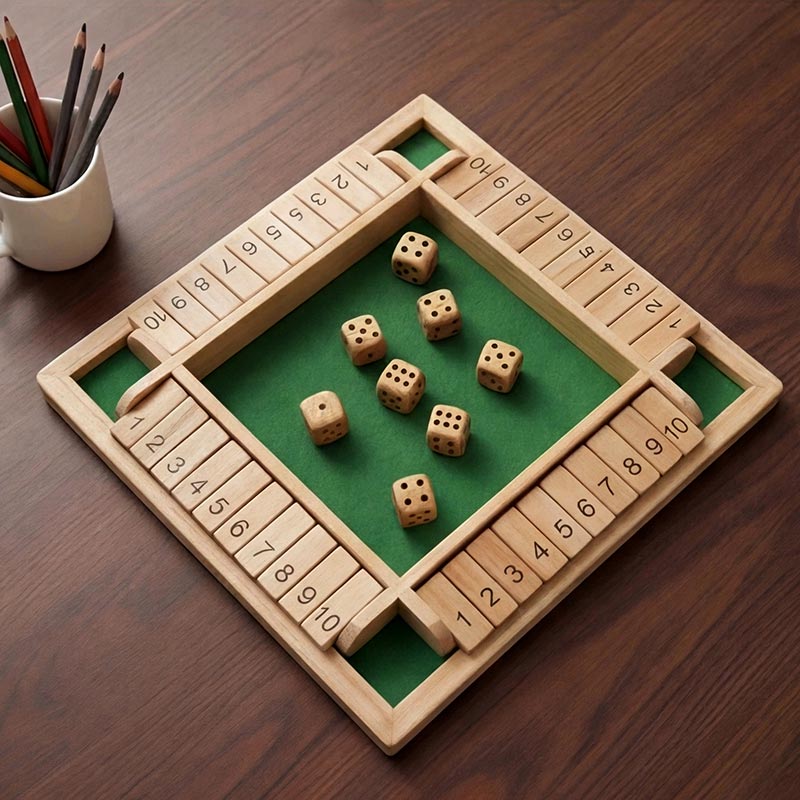
Traditional flashcards and worksheets often create resistance, turning math into something children want to avoid. This game takes the opposite approach: it disguises practice as competition, where every roll presents a new number challenge to solve.
Children naturally develop mental math strategies as they search for tile combinations that match their dice total. The hands-on format makes abstract numbers concrete, building genuine understanding instead of memorized answers. Learning happens so smoothly that kids ask to play again before they realize how much they've practiced.
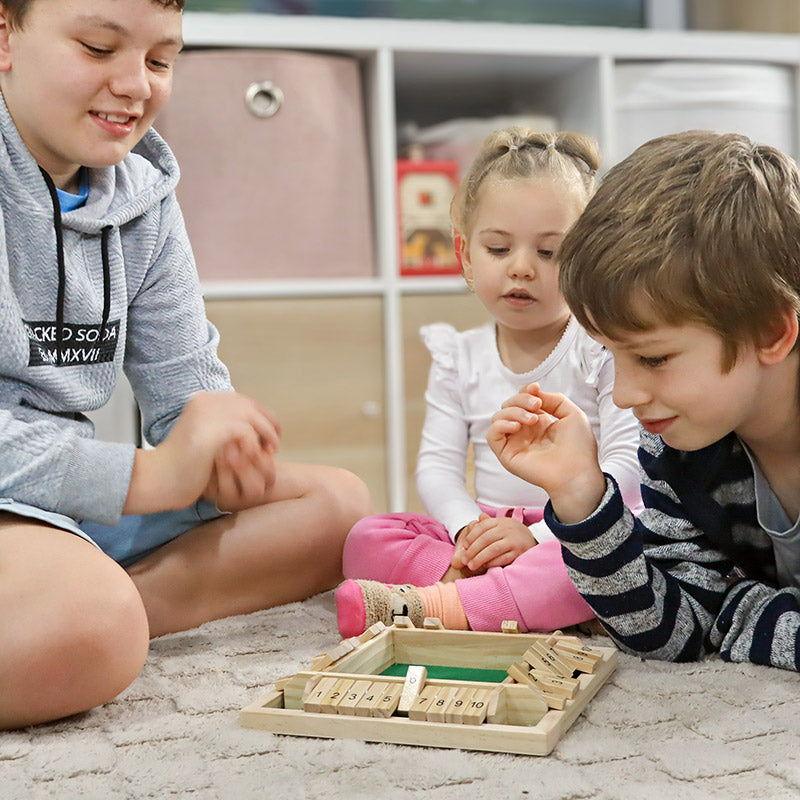
Four-year-olds start with one die and simple one-to-one matching, while older children tackle two-dice addition and strategic tile selection. The same board serves beginning counters and confident calculators through flexible rules that adjust to each player's level.
Families with mixed-age children play together by giving younger ones simpler goals, keeping everyone engaged without anyone feeling left behind. The durable wooden construction survives years of regular use, making this a game that earns its place in your home rather than disappearing into a closet after a few rounds.
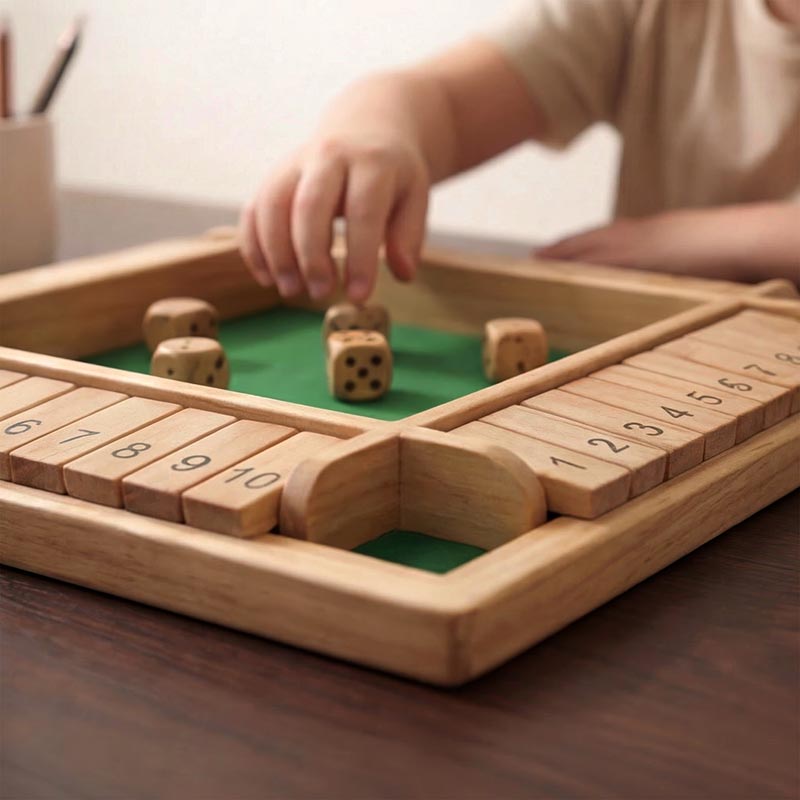
The entire game comes from natural wood chosen for both safety and longevity. Smooth edges and a solid construction mean this game withstands enthusiastic play without splintering or breaking, and the wooden dice roll satisfyingly across the felt-lined center.
Maintenance requires nothing more than a dry or slightly damp cloth for cleaning. The compact square design stores easily on a shelf, and all pieces stay contained within the frame so nothing gets lost between game sessions.
Screens isolate even when people sit side by side, but this game brings everyone to the same table with shared focus and genuine interaction. Players cheer clever combinations, discuss strategies, and celebrate progress together, creating moments of connection that digital entertainment rarely delivers.
The cooperative spirit emerges naturally as family members help younger players spot number combinations or work together to beat their previous best score. These moments of teaching, learning, and laughing together become the real victory, long after determining who flipped the last tile.

Questions before you buy
Start with one die instead of two, and let them simply match the number they roll to the corresponding tile. As they grow comfortable with number recognition, introduce adding small numbers by rolling two dice with lower values. The game naturally scaffolds learning at whatever pace suits your child.
The strategic element of choosing which tile combinations to flip keeps the game engaging for players of all ages. Adults often find themselves calculating probabilities and planning several moves ahead, especially as fewer tiles remain on the board. It's genuinely enjoyable family time rather than something you endure while children play.
The round ends when dice rolls no longer match any remaining tiles. Players count their remaining tiles, and whoever has the fewest wins that round. You can play single rounds or keep score across multiple games for extended play sessions.
The game works for one player practicing solo or for multiple players taking turns. With more than four players, consider forming teams so everyone stays involved between turns. The quick pace keeps attention even when waiting for your turn.

You may also like


